
Black Spider Wasp
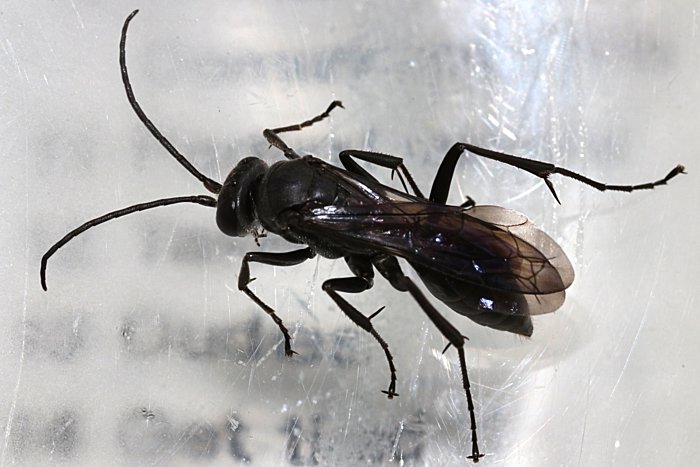
This little black wasp was in our kitchen on September 17, 2025. I caught it in a plastic container and put it in the refrigerator for a few minutes to slow it down, then turned it out onto a magazine page for pictures.
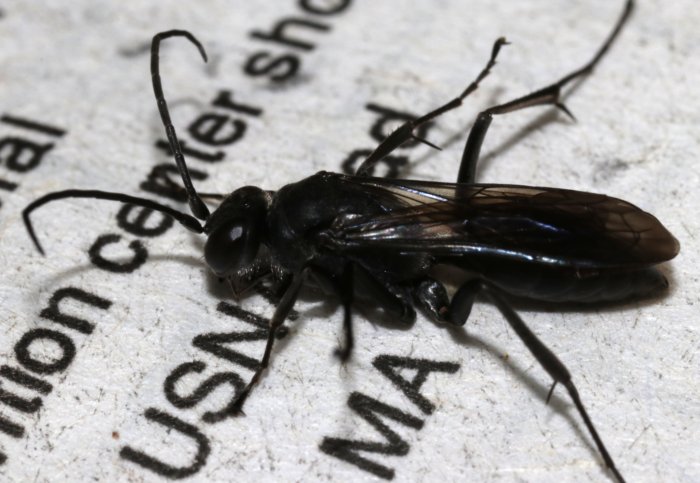
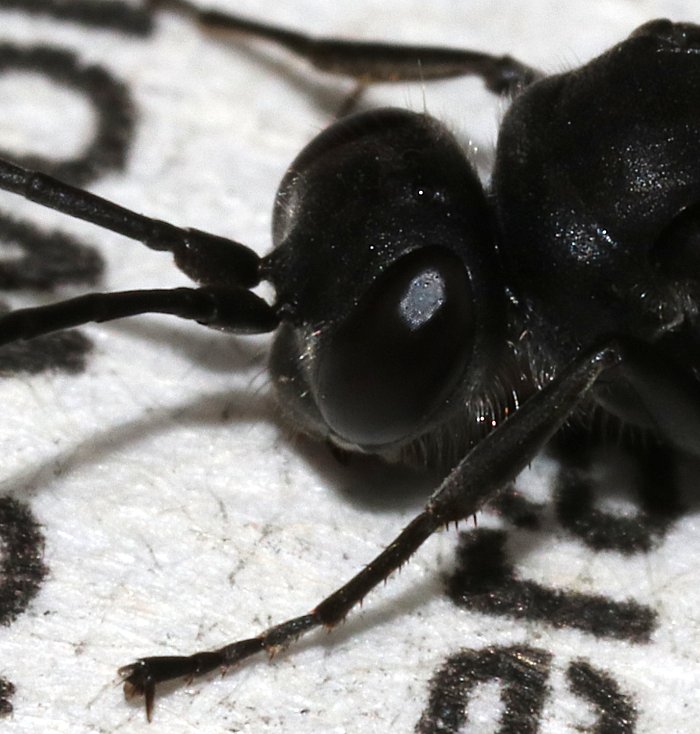
This is another deeply black insect that is difficult to see detail because there is no contrast between body parts.
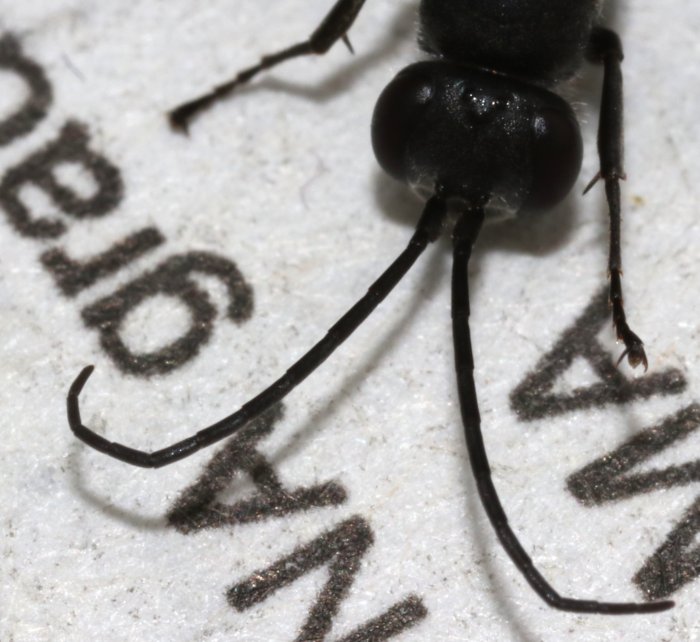
It is evidently one of the “Spider Wasps” in the family Pompilidae. While not all of the 300 or so North American wasps in this family are plain black like this, a lot of them are.
The adults feed on flower nectar, and so are found pretty much anywhere that there are flowers. The females hunt down many different types of spiders, on which they lay their eggs. Depending on the species of wasp, they may sting and permanently paralyze the spiders and then drag them to a burrow where they lay their eggs, or they may just temporarily stun the spider and lay their egg on it where it is.
It does seem weird that there are so many species of wasps that are specifically parasitoids of spiders. One would think that preying on predators would be awfully dangerous, and that the wasps would be better off going after other hosts, like caterpillars. On the other hand, a lot of caterpillars have developed internal toxins and anti-parasitoid immune systems that may make them a lot less attractive as hosts. It may well be that spiders are just so nutritious for the young wasps, that it is worth the risk to go after them.
Spiders also have other traits that might make them attractive prey: First, they have a central nerve ganglion in their cephalothorax that is an easy target for a wasp sting, which makes them very susceptible to being paralyzed by a single sting. Second, because of the way their legs bend, they can’t really reach something on their backs, so if the wasp comes in from above it can grab them from behind and the spider can’t do much about it. And third, spiders mostly can’t see too well, so a wasp can come in, check out the spider to see the best approach direction, and then lunge in for the attack before the spider ever knows she is there. I’m sure attacking spiders is still risky, but maybe not as risky as it appears.
This is a fascinating observation! Black spider wasps are truly impressive insects, and your detailed explanation of their behavior and hunting strategy is incredibly insightful. It’s amazing how these wasps can target spiders—one of nature’s most efficient predators—and still come out on top. Your breakdown of why spiders make suitable hosts, from paralysis points to their limited vision, really highlights how specialized and intelligent these wasps are. Thanks for sharing such a well-documented encounter and shedding light on a species many of us rarely get to see up close!