
Ant Raid
On July 4, 2026, I was walking on the logging road through the commercial forest land behind our house, and happened to spot this thin line of ants scurrying in both directions across the road.
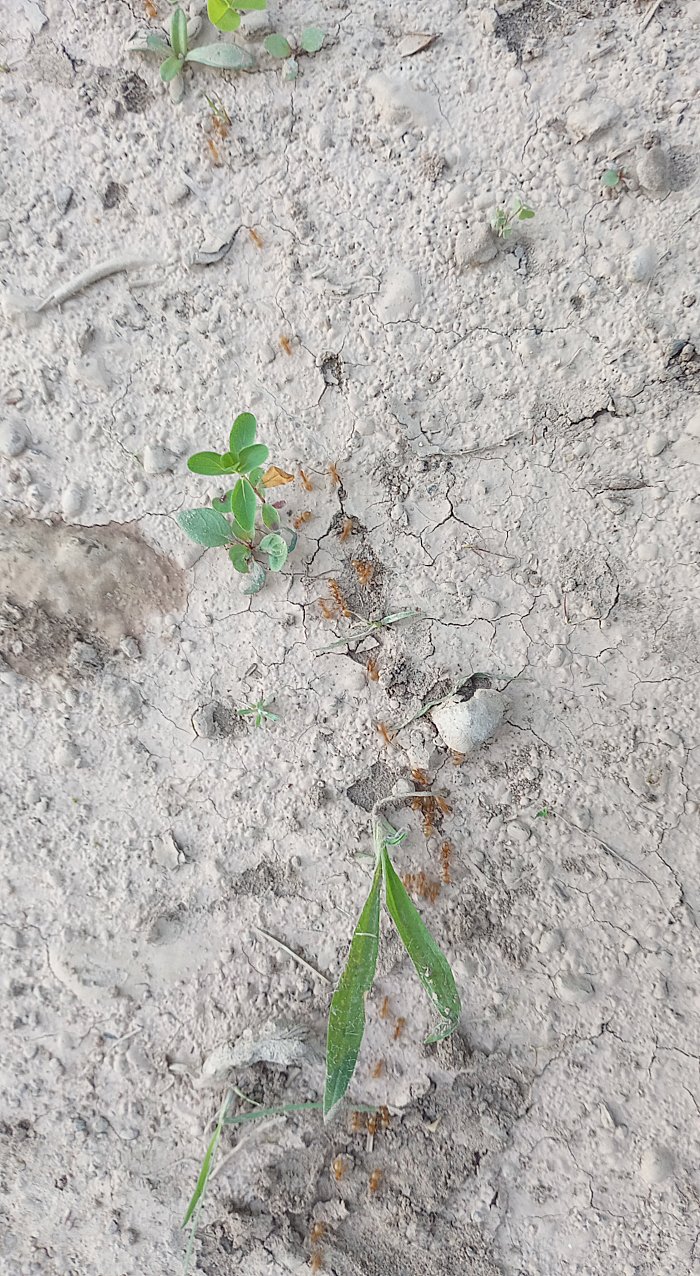
Here’s a video of the ants, streaming in both directions:
https://youtube.com/shorts/HpjWr4NHhoE?si=f0s0Cd2mCmkejyfw
There was one nest on the east side of the road that had a leaf over the entrance,
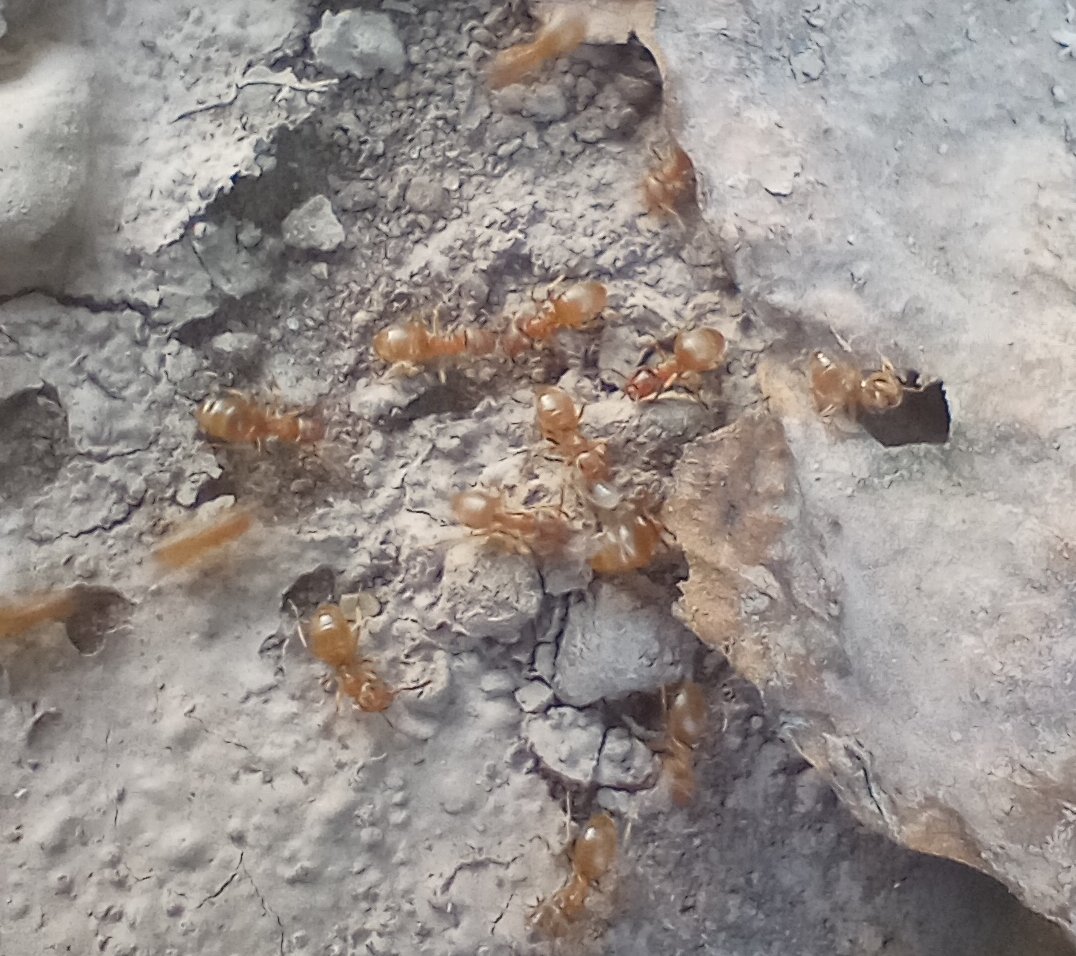
and another nest, about eight feet away, on the west side of the road.
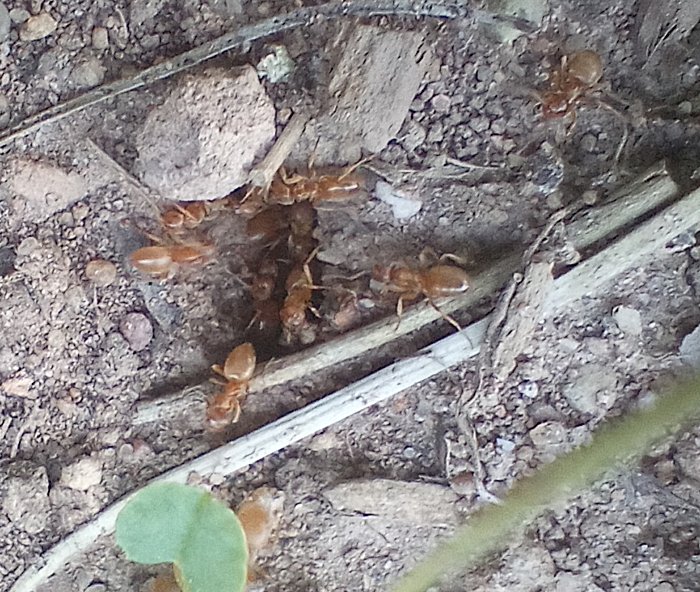
I unfortunately only had my phone camera at the time, and they were very fast, so it was hard to get pictures of what they were up to. But what I saw was that about one ant in ten or so was carrying a small grub in its mouth, so this was apparently at least partly a kidnapping raid. Here’s the best picture I could get of one of the grubs being carried off:
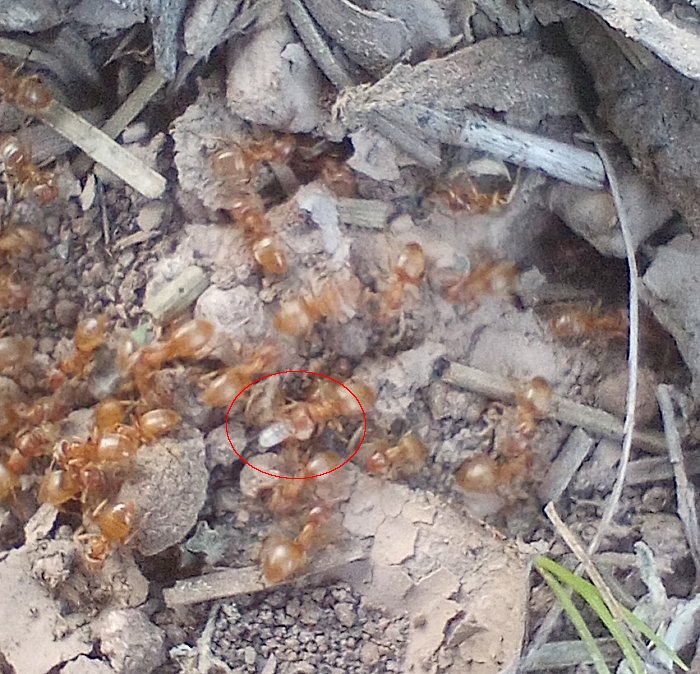
The thing is, I am not entirely sure which ant nest was being raided. In this video, for example, it looks like an ant carried a grub outside, changed its mind, and then went back inside.
https://youtube.com/shorts/aqWOyw46Jrc?si=Xm4wuY2i6AWHP87h
The net flow of the kidnapped ant larvae appeared to be from the eastern nest to the western nest, but for every three or four carried from east to west, anothe one would be traveling west to east.
All of the ants involved were pretty much indistinguishable. They were either all the same species, or two very closely related species, or the species that was being raided simply wasn’t showing itself above ground.
Anyway, the photographs are sadly pretty bad and so I can’t positively identify the species. But these are likely to be one of the “slave-taking” ant species. They aren’t grabbing those larvae to eat, they are kidnapping them to raise up to be workers in their own nests. This is behavior that has evolved independently a number of times, and there are multiple species in Michigan that will do this. I understand that there are varying degrees of this behavior. Some species just raid other species to boost their colony numbers a bit, while others are completely dependent on the larvae that they steal for their own survival.
The most likely species of obligate slave-taking ants to be found around here are probably in the genus Polyergus, which has somes species that live in the northeastern US. The actual Polyergus ants can’t take care of themselves, and so they need to have the ants that grow up from these kidnapped larvae to do their foraging, raise their own larvae, and generally look after them. It is a variety of nest parasitism, only instead of moving into the other ants’ nests, they bring the other ants home to work for them.
The ants that they kidnap are in the related Formica genus, who apparently use sufficiently similar chemical signals that the kidnapped ants accept the Polergus nest as being their own. The Polyergus have to launch raids on a fairly regular basis to keep the numbers of their servant ants up.
The way the Polyergus nests reproduce is more like a palace revolution than a slave-taking raid. A newly-mated Polyergus queen will sneak into a new nest being established by a Formica queen, and insinuate herself into the colony and start laying her own eggs. She then commences laying her own eggs, and once the Polyergus brood starts to emerge, they kill the old queen and it becomes a Polyergus nest complete with its initial compliment of Formica servants.
As you might guess, it is fairly difficult for the Polyergus queens to pull this off, and so nests of these slave-taking ants are fairly uncommon. This is only the second one that I have seen in the whole time we have been living on our property (the last one I saw was raiding across our driveway about 25 years ago). So, even though the photos are kind of crummy, I still wanted to get this posted just because I might not ever get another shot at it.