
House Pseudoscorpion, Take Two

This little cutie was on our bathroom wall on March 11, 2026. I knew what it was right away, because it is one of the first things that I photographed way back in 2007!
It’s a House Pseudoscorpion in the family Cheliferidae, and most likely Chelifer cancroides
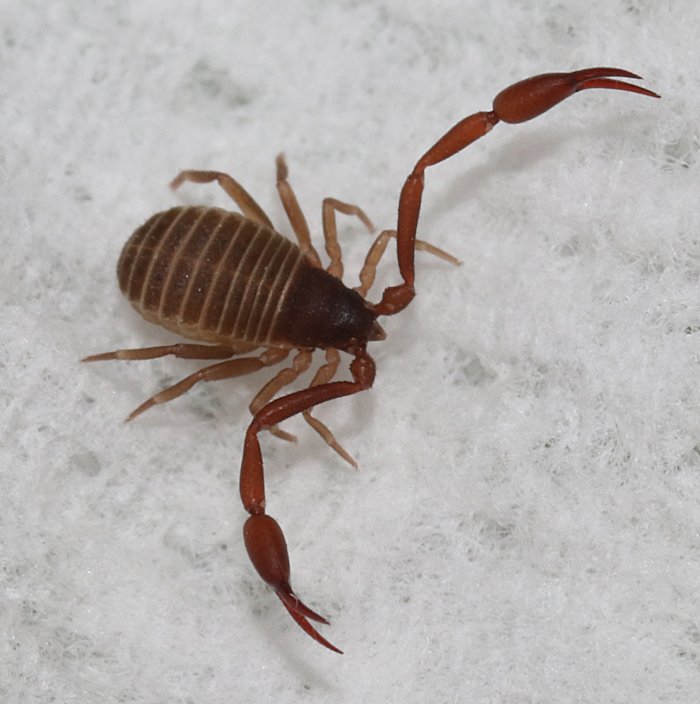
While they look a lot like a scorpion without a tail, they actually are in their own order and aren’t particularly closely related to scorpions. The are all arachnids, though, and so they are more closely related to spiders than to insects. Since pseudoscorpions don’t have a stinging tail, and also don’t appear to have the fangs that spiders have, they are completely harmless to humans. Although they do often get mistaken for ticks or bedbugs (which look similar).
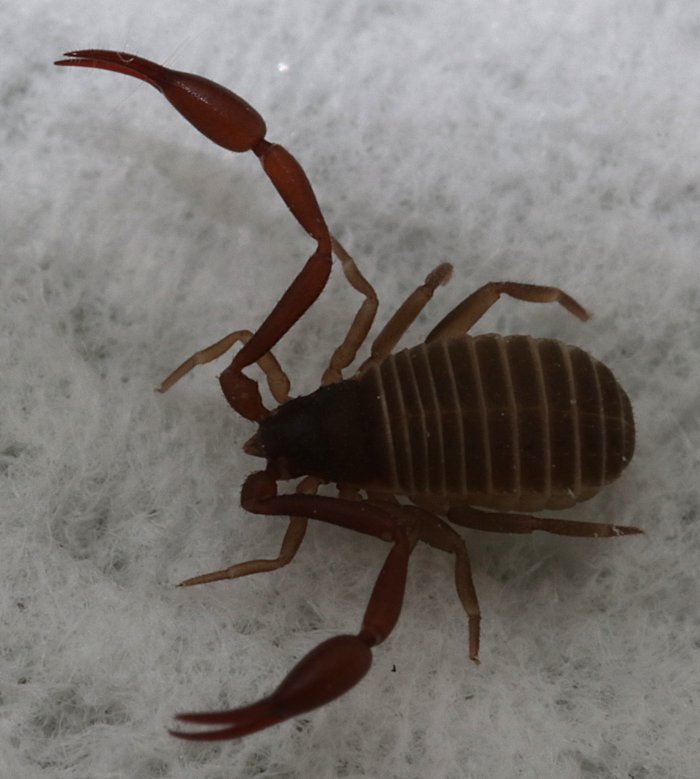
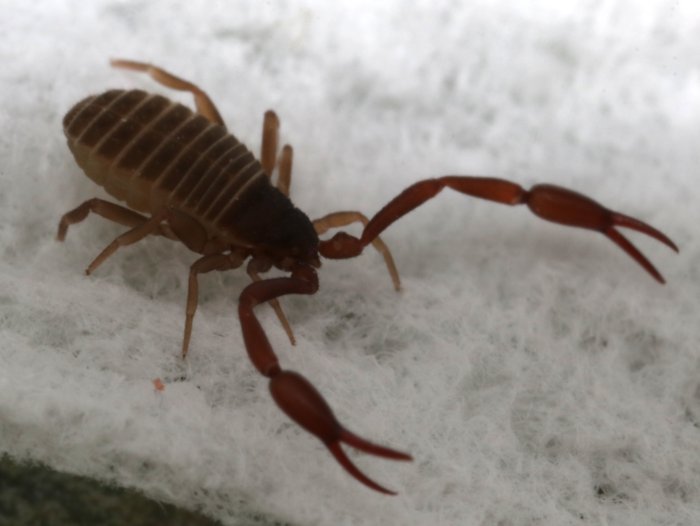
This particular species does not appear to have any visible eyes, and is probably blind.
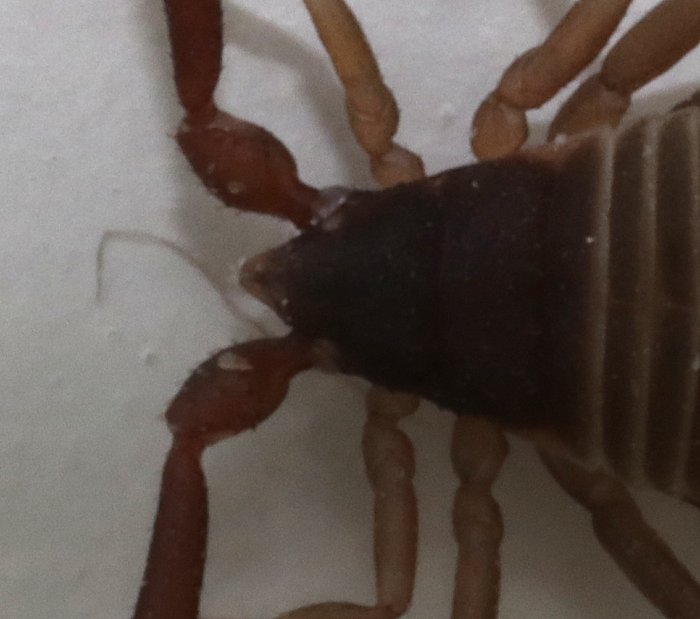
And yet, when I brought my finger close to it, it reacted to my presence as soon as I was within about an inch of it. The way it could tell that my finger was there, was that the tiny hairs on its claws detected the air disturbance (and maybe my body heat).
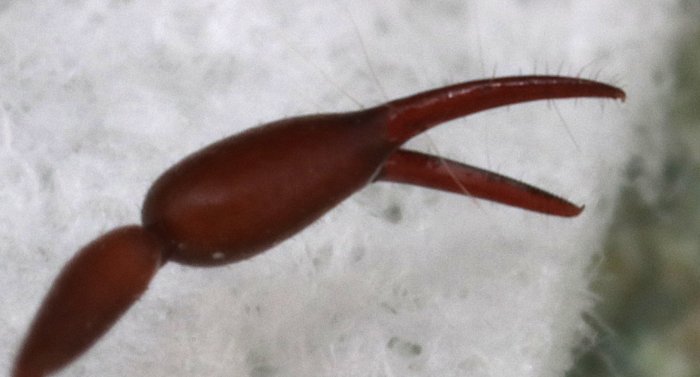
The claws on a pseudoscorpion are actually homologous to a spider’s pedipalps, which aren’t really legs and are more similar to certain mouthparts on insects and the “second antennae” on crustaceans. So it is reasonable that they would be doing the same general tasks as antennae would.
Pseudoscorpions eat smaller arthropods, like dust mites, springtails, and eggs or young nymphs/larvae. Basically, anything small enough that they can subdue it with their claws. Technically they are beneficial in the house, because they eat things that we would otherwise consider vermin, and they don’t leave webs all over the place the way spiders do. But, since I am currently only spotting one of them in the house every (counts on fingers and toes . . .) 19 years, I don’t think they are likely to have a high enough population density to make much of a difference one way or the other. Given that they don’t seem to occur in significant concentrations, I suspect that they eat each other if they get too plentiful.
So anyway, I released it into the pot for one of Sam’s date palms, where it should have a good supply of fungus gnats and springtails to feed on.
Comments are closed.