
Bog Iron and Stonefly Nymphs
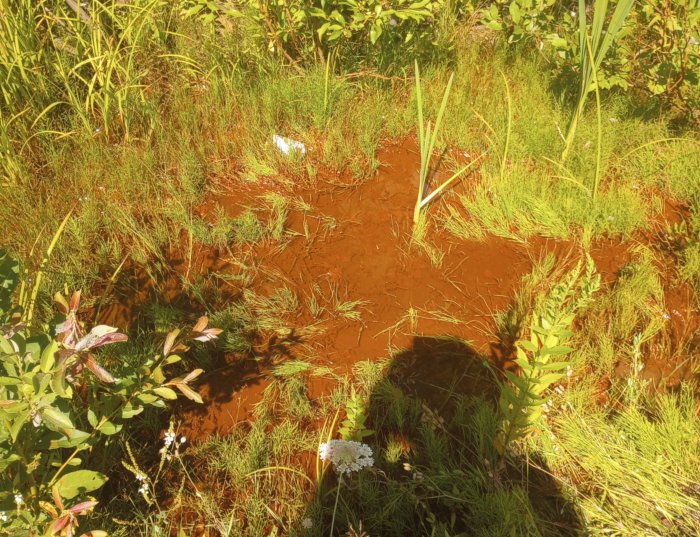
So, this summer I have been working on harvesting “bog iron” from the swamp next to our house. See that red mud in the ditch? That is mostly iron hydroxides. This is forming as a result of iron-reducing bacteria dissolving iron in the subsoil under our swamp, and then when the iron-bearing water seeps into the roadside ditch, the iron comes in contact with the air, reoxidizes, and precipitates. This is of professional interest to me[1], so I decided to collect enough of the material that I can actually do some experiments with it.
My goal was to get several kilograms of material, so I mounted a scoop on the end of a stick so that I could bail the bog iron out of the ditch more conveniently. The scoop is an animal feed scoop from Tractor Supply, and the stick is part of a broken shovel handle.
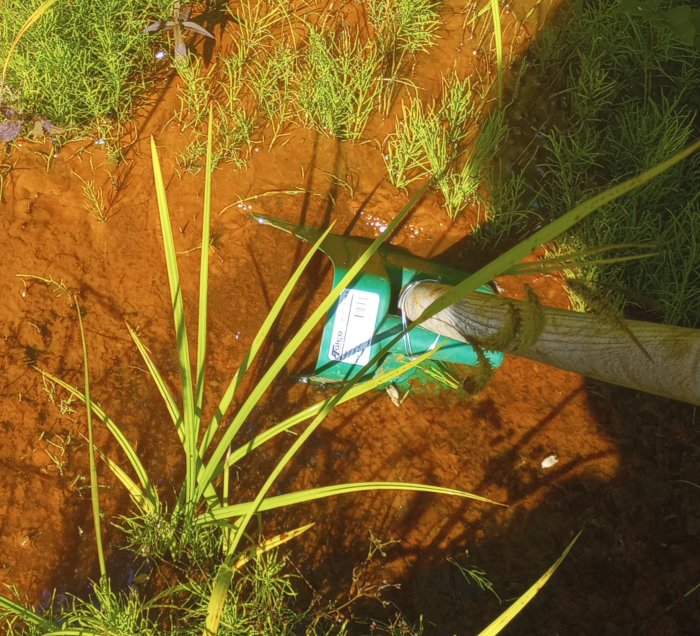
This worked really well, and I could quickly scoop up several 5-gallon buckets of the bog iron slurry.
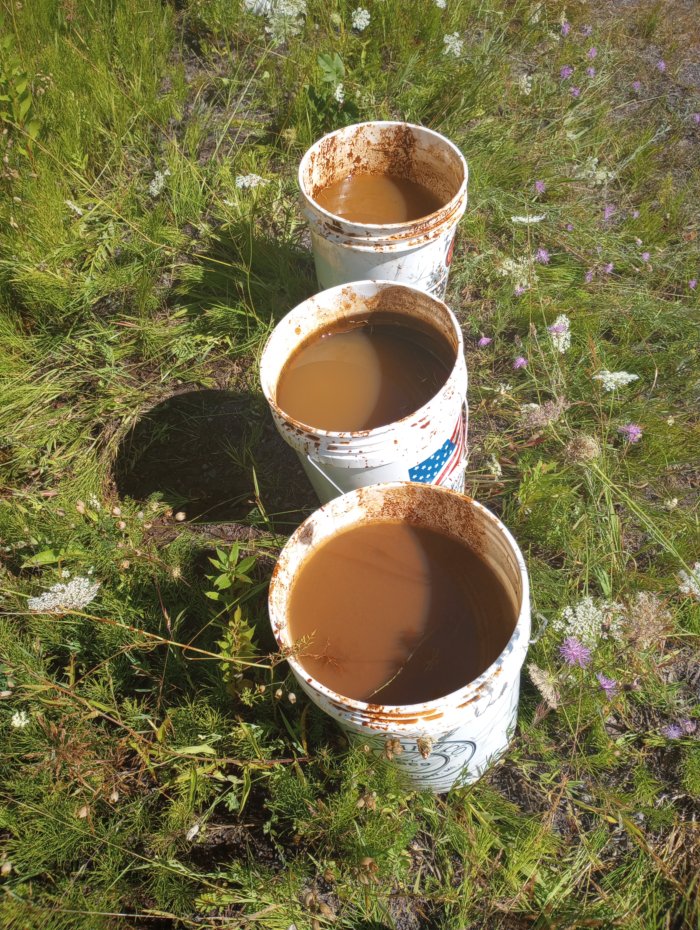
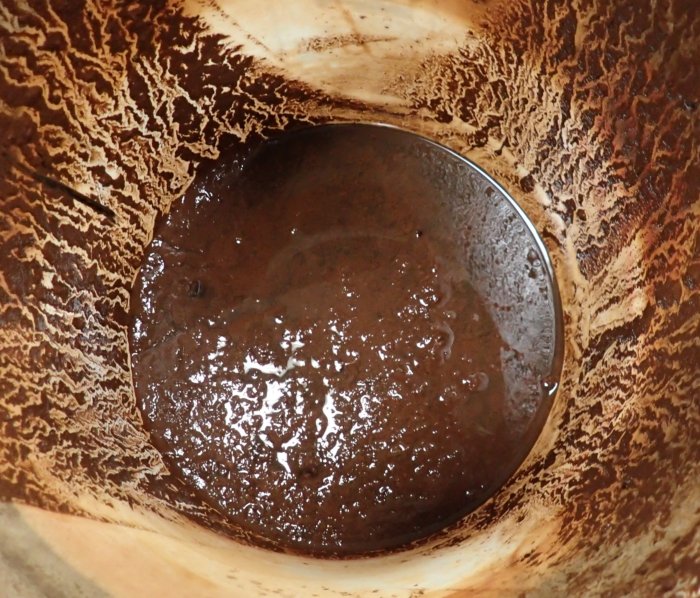
I then took the buckets into the lab, and let them settle so I could pour off most of the water. Here is some of the settled solids in the bottom of one of the buckets:
I needed to get more of the water out of the bog iron before I could do much with it. In the lab, we have a pressure filter that is ideally suited for this sort of thing. The way this works is, there is a base with a screen that I put a piece of filter paper on. Then I set this steel cylinder on top of the filter paper, pour in the mud that I want to filter, and then put a cap on top. The whole thing is clamped together with a jackscrew, and then pressurized to about 60 psi to force out the water.
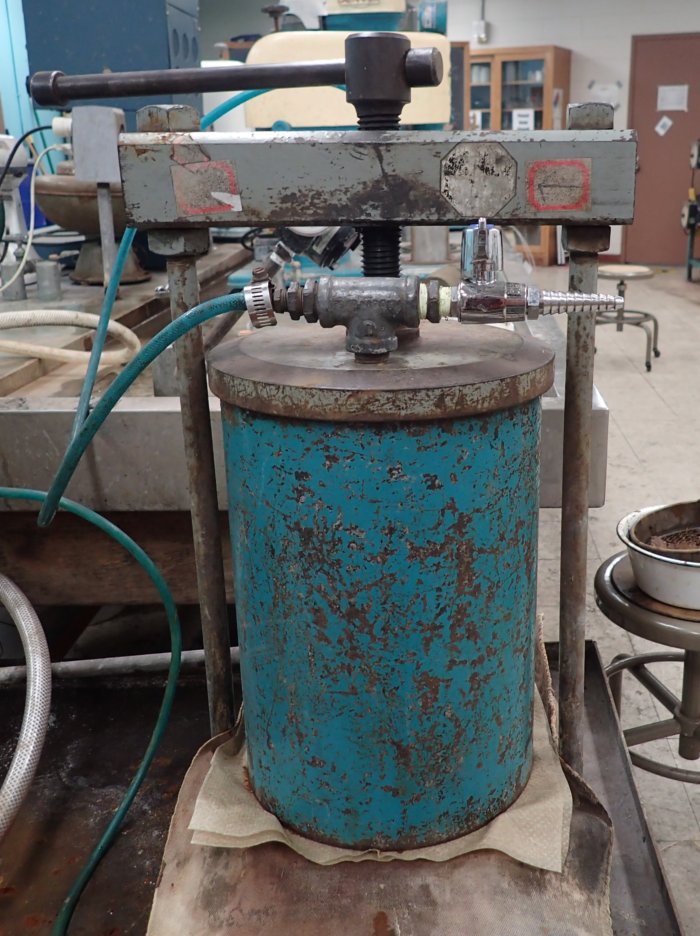
Then, when the water is forced out, the whole thing is unclamped, the steel cylinder is removed, and we have a mostly-dewatered filter cake:
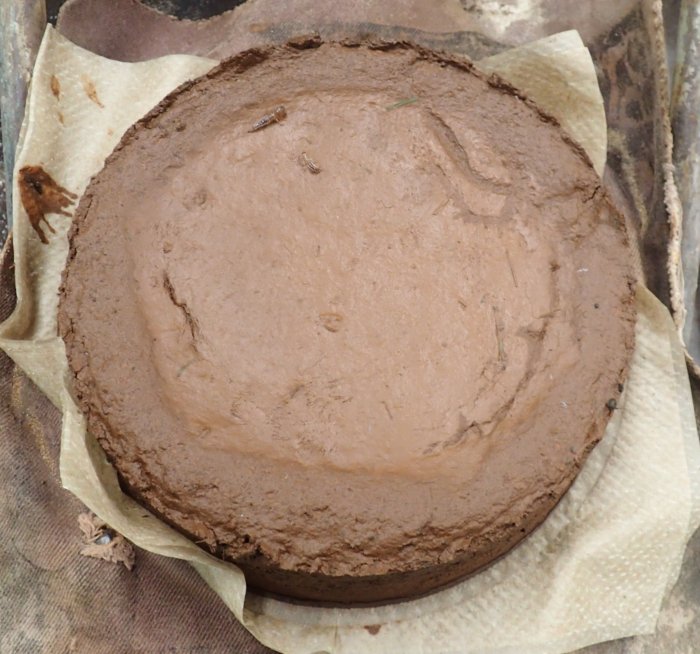
At this point, I noticed something unusual: there were some small insects crawling around on top of the filter cake! You can see a couple of them in the upper part of the previous picture, and here is a not-very-good closeup picture:
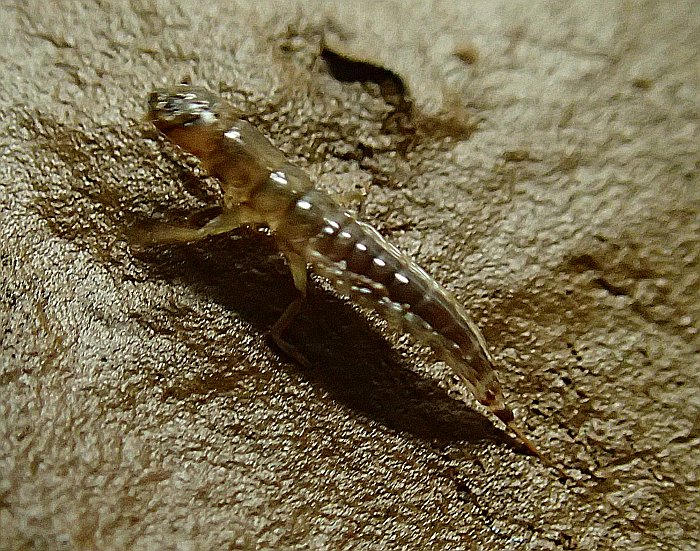
I believe this is a stonefly nymph. Now, this is an important point: one of the reasons that I am interested in bog iron, is that I think it can be turned into an industrial-scale process for producing high-grade iron ore that will be more environmentally-friendly than traditional iron production. And these stonefly nymphs are an indication that this is the case. They have a reputation for living only in water that is of good quality, and here they are actively living in my iron ore extraction process! Basically, the animals that currently live in the swamp, will be able to continue living in the swamp while I actively mine iron from it!
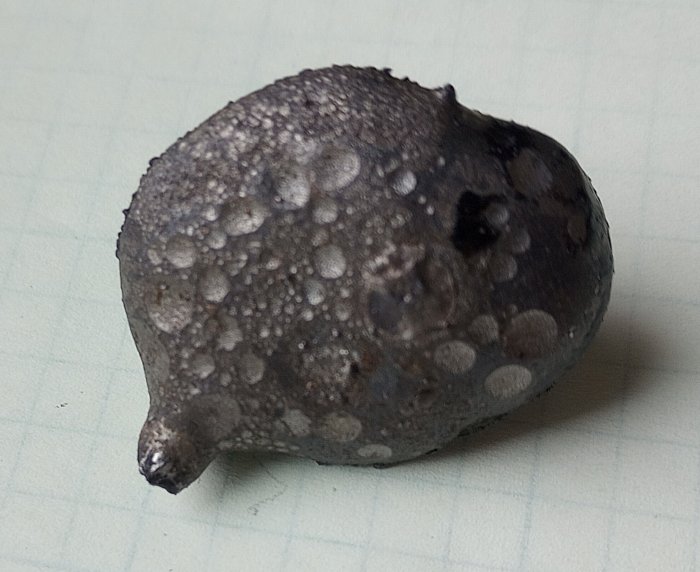
Anyway, after filtering the bog iron and picking off the stonefly nymphs (which I ultimately returned to the swamp), I took the filter cake, dried it, and then put some pieces into a graphite crucible. I then connected the crucible to the ground line of an arc welder that I have in the lab, put a graphite rod into the welder’s electrode holder, struck an arc in the crucible, and melted the bog iron down. And, it turned out that there was enough organic matter in the filter cake, that it was able to chemically reduce the iron hydroxides all the way to metallic iron.
FeOOH + Carbohydrates + heat ==> Fe (metal) + CO2 + H2O
And here’s the lump of metallic iron to prove it!
[1] My day job is to teach metal extraction in the Chemical Engineering department at Michigan Tech, and my ongoing research is to develop a microbial process for cheaply extracting metals from ores with a minimum of environmental impact. Primarily, I am working on extracting iron, manganese, cobalt, and nickel, all of which can be dissolved by the same general category of metal-reducing microorganisms. I have the process working in the lab, but it is currently making metal concentrates at the rate of a few dozen grams at a time. We are working on scaling it up considerably to the point where it can make tens of kilograms of material, but that’s going to take a while to finish. In the meantime, I wanted a few kilograms so that I could get a better idea of how the product was going to behave and how to handle it. And since our swamp was obligingly producing this product in quantity without me having to do much preparation work, I figured this would be a good opportunity.
So, anyway, this is what I’ve been doing over the summer, and is part of the reason that I have been too busy the last couple of months to update this blog as much as I would like.