
Earth Star Fungus

The ice is starting to break up on Lake Superior, so Sandy and Sam went up to the beach at Mclain State Park on March 20, 2026 to see if there was anything interesting. And one of the things they found was this peculiar star-shaped object, just lying there frozen into the sand on the beach. So Sam brought it home for me to get pictures. It was about two inches across.
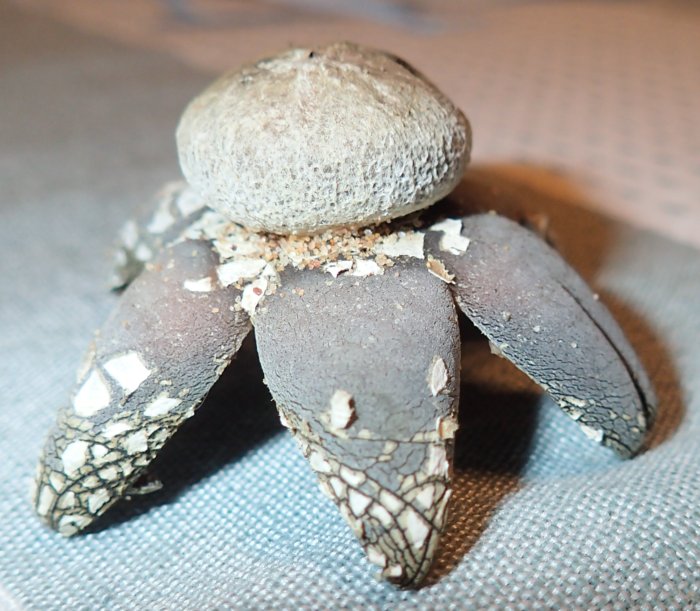
It consists of the star-shaped portion, and a sac on top that, when poked, would shoot a little cloud of spores out of a hole on the top.
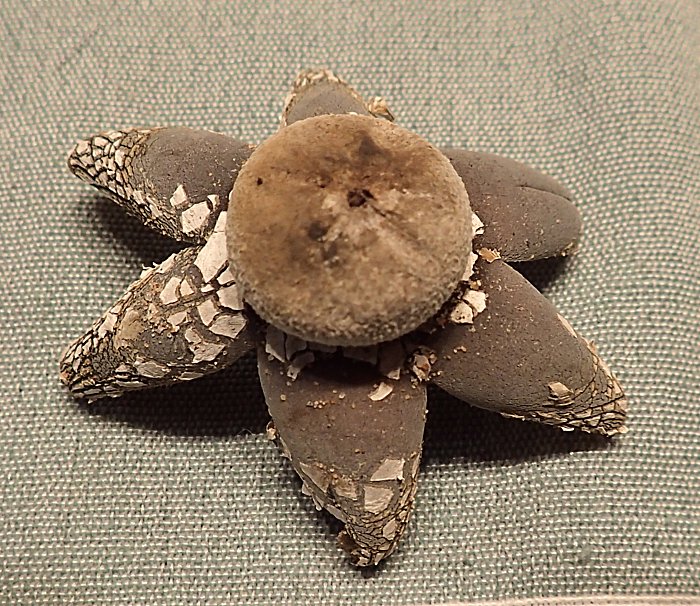
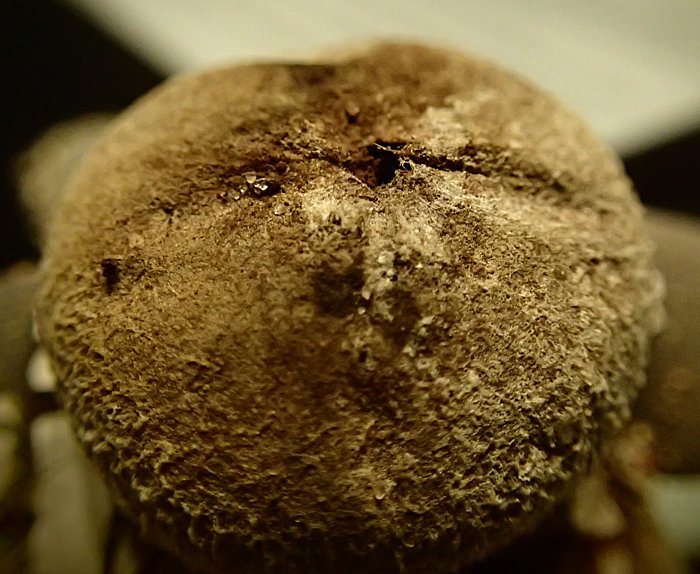
Here’s a closer view of the spore sac:
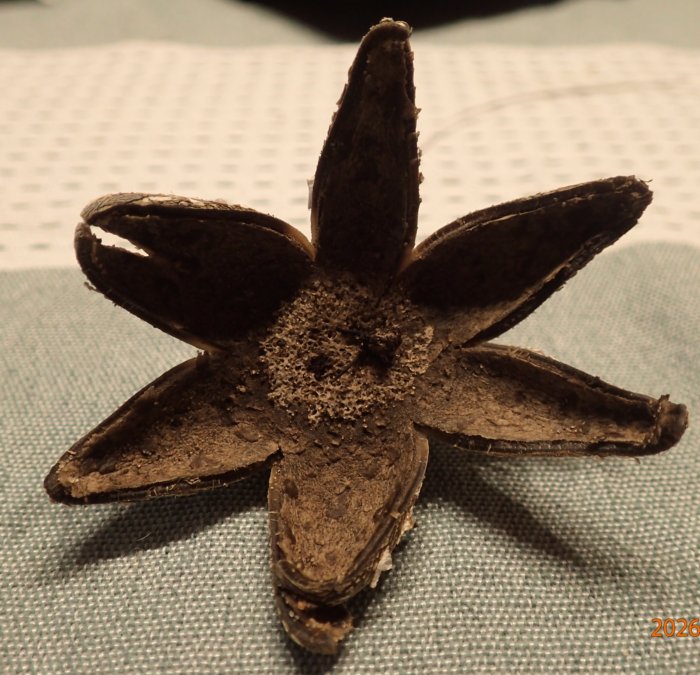
Looking at the bottom, we can see that it used to be attached to something. The “petals” appear to have been a husk that peeled away from the spore sac.
Those pictures were all of it while it was still damp from being at the beach. When I let it dry out overnight, the petals curled back up around the spore sac, making it into a fairly rugged little ball.
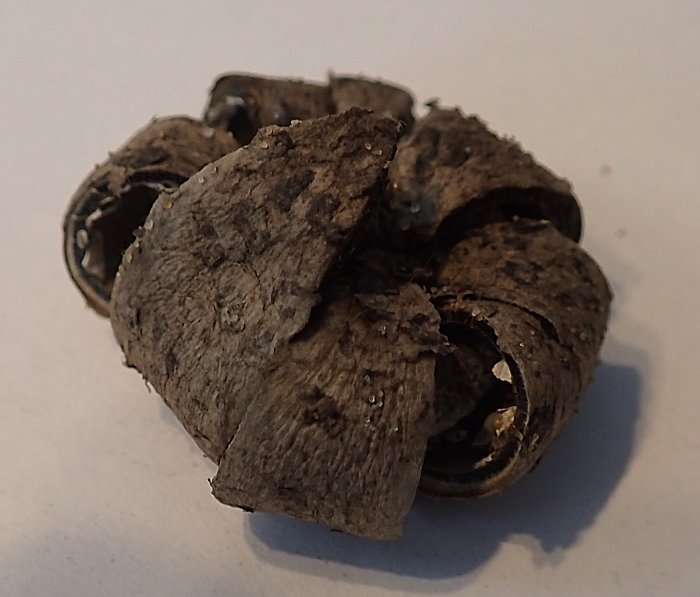
So, based on the spore sac, we assumed that this was some sort of a fungus, probably at least distantly related to “puffballs”. A bit of searching online showed that this was one of the fungi known as “Earthstars”. Although, looking at the pictures, it probably isn’t one of the “true” Earthstars in the genus Geastrum. It is more likely to be one of the “False Earthstars”, in the genus Astraeus. And the most widespread of these is Astraeus_hygrometricus, the Hygroscopic Earthstar, so named because it opens and closes in response to changes in humidity (just like our specimen did here when it dried out).
These are the fruiting bodies of a fungus which grows in association with many different tree species, and in Michigan they mostly associate with pines and oaks. This is an ectomycorrhizal species, which means that it is symbiotic with tree roots, helping the roots to extract essential minerals from the soil, while receiving nutrition from the roots.
When the fruiting bodies are dry and curled up, they break loose and can be blown around by the wind, like little tumbleweeds. Then when they get moist enough to open up, they orient so that the spores will shoot up into the air. And since it is moist enough for them to open, it will also likely be moist enough for the spores to take hold and grow into new fungi.
While this was found in March, it has likely been knocking around on the beach all winter, so who knows when it actually fruited. Probably sometime last fall.
This is a really thoughtful take on where AI is heading. I appreciate how you’ve broken down the complexities into something more digestible. The pace of innovation in this space is truly remarkable.