
Northern Caddisflies
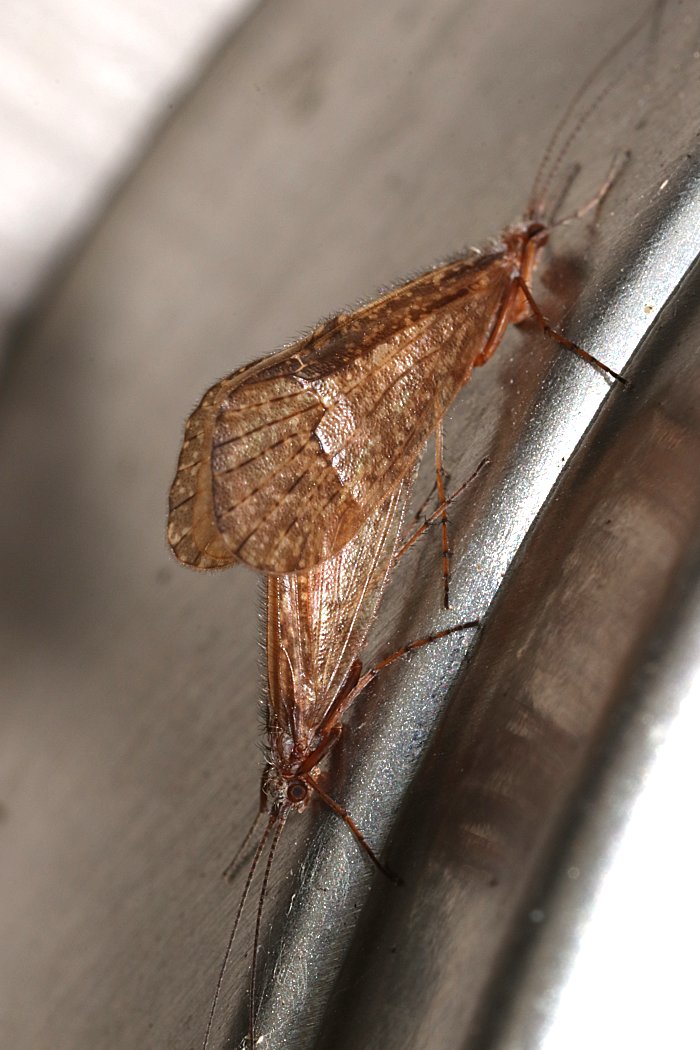
On November 15, 2025, we once again had Northern Caddisflies coming to our porch light. These are one of the very few species of insects that we regularly still see flying around in mid to late November, after we have had a couple of hard frosts and pretty much all other flying insects are out of commission.
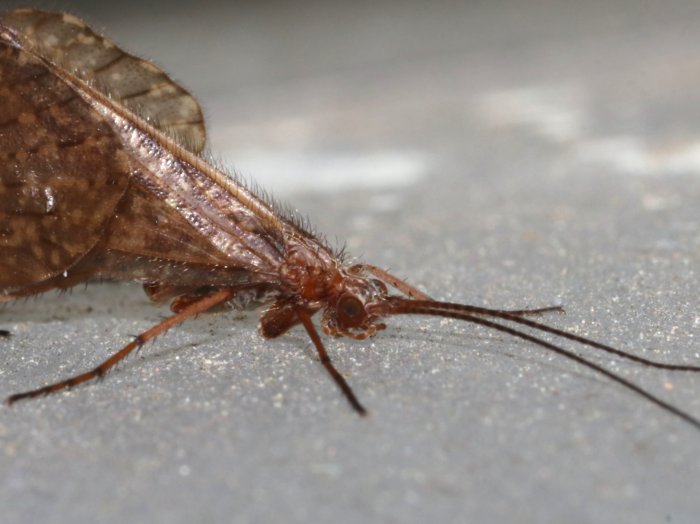
These are most likely in the genus Frenesia, although it is apparently kind of hard to tell caddisflies apart down to the species level. One of the possible species is Frenesia difficilis, where “difficilis” is a species name that that taxonomists frequently use when they want to be very clear that, “hey, this species is really hard to tell apart from the others, OK?”
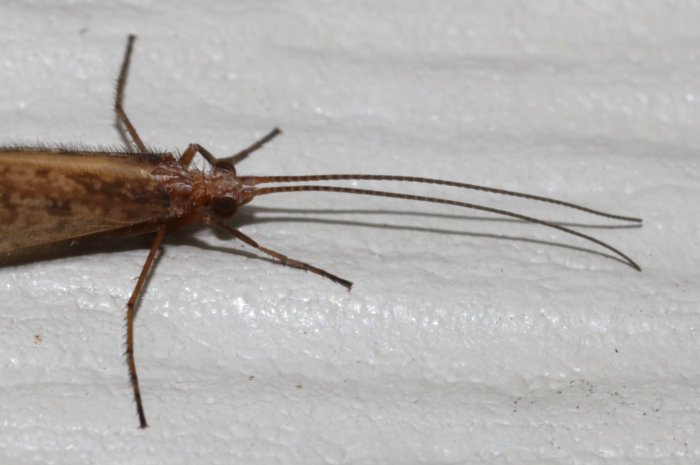
Caddisflies have very simple antennae, which means that in order to get enough surface area to be reasonably sensitive, they have to be very long.
I think that these are another one of the species where the adults live just long enough to mate and lay eggs, and so they don’t bother with luxuries like “eating” or “functional mouthparts” or “self-preservation”.
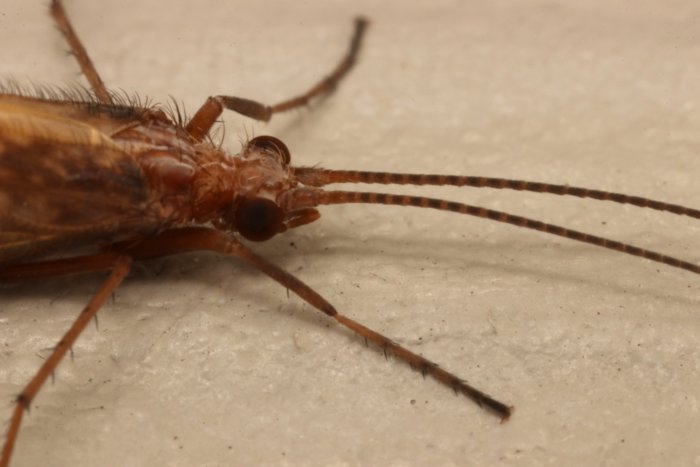
They are able to be flying around in November because their larvae are aquatic, and live in running water that doesn’t freeze up. So, even after a hard frost has knocked out the other flying insects, these are able to pop out of the water, molt, and fly off to mate as long as there is a day or two where it stays above freezing. The big advantage to waiting until it gets so late, is that by the time they emerge the flying predators are all gone – the dragonflies and robber flies are dead, the bats are hibernating, and the insectivorous birds have flown south for the winter. So even though they show little or no sign of a survival instinct, there is nothing much around to eat them, so they are fine.
Meanwhile, as I write this we are getting into late April, and we are getting the cold-tolerant insects that are on the other end of the winter starting to come out. For reference, we just had a significant cold snap last night (25 degrees F and strong wind), so only the most cold-tolerant insects are likely to be coming out in the coming week.