
These plants were growing in the ditch beside our road, and were photographed on July 5, 2016. At the time I took the pictures, I thought they were both the same species, but I’ve since found that they are different (but closely related) plants.
The first one is Curly Dock, Rumex crispus. This is a fairly tall plant, with this specimen standing something over three feet tall.

We found this large, handsome beetle under one of the “snake sheets”[1] on June 26, 2016.

The gold spots on the wing covers are quite pretty.
Sam, Rosie, and I were out walking in the woods on October 9, 2016, when Rosie spotted these two slugs, huddled together in a little slime-filled pit in the ground. She wanted to know what they were doing.

Green Leafhopper with Smoky-Gray Back
Sam and Rosie caught this leafhopper for me on June 25, 2016. Most of the leafhoppers we see are either green, or have some sort of complex coloration. But this one just looked like it had started green and then had its back smoked.

This plant was going to seed alongside our road on July 7, 2016. It was quite tall, and while I don’t have a picture of it here, it exudes a milky latex if a stem is broken.

I just missed the flowers, but I’ve seen them (they are composite-type flowers, with long, thin, yellow ray petals). Once the flowers finish, they close up and drop their petals, and finish ripening while looking like this:
This rather lumpy-looking moth with prominent white spots came to our porch light on August 1, 2016.
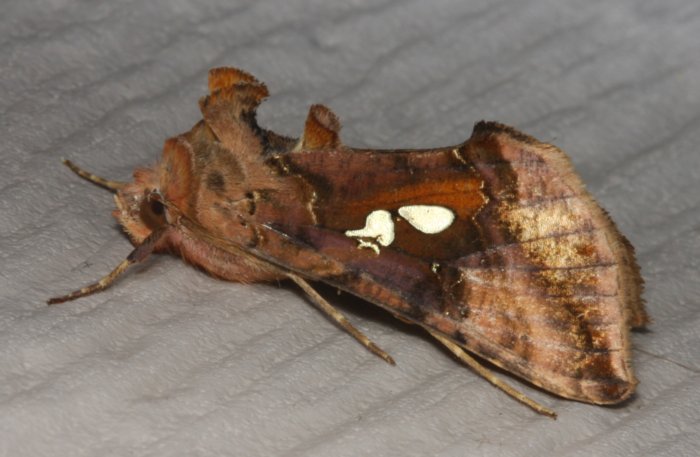
The tufts of fuzz on the shoulders and back are pretty good at breaking up the outline, and making it look more like a bark chip than a moth.
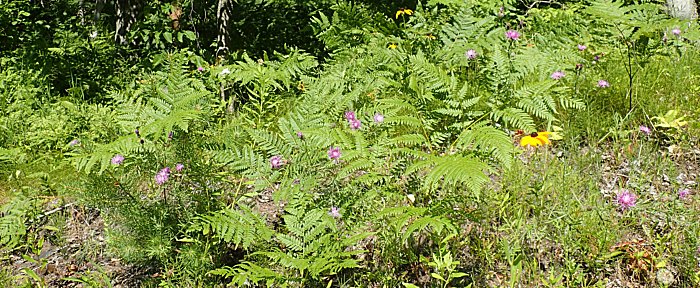
Some months ago, I posted some pictures of wild ferns that I had initially misidentified as bracken ferns. They weren’t.
These, that I photographed on August 1, 2016, are a different story, though. They are most definitely Bracken (and were growing just a few feet uphill from the not-bracken-ferns).
So, here we are. Ten years ago today I posted my first online insect pictures – a blurry fly, and a cecropia moth caterpillar:

This smallish reddish-brown moth was at our porch light on August 1, 2016.

It’s pretty clearly one of the Tortricids, a large family of small-to-medium-sized moths that generally have that particular round-shouldered appearance when at rest.
These grass-like plants grow in the wet ditches beside our road, and were setting seed on June 29, 2016.

The leaves are tougher and more fibrous than most of the local grasses, and the seedheads are on drooping stalks.