
This moth was hanging around our porch light on August 8, 2016. It had a fairly striking pattern of wavy dark lines across a light gray background.

It also had quite feathery antennae (so was probably a male), and small, but distinctive, yellow-orange spots on top of his head and on each shoulder.
By June 26, 2016, a lot of the slow-moving water down at the Pilgrim River wildlife area had been covered by mats of duckweed, like this:
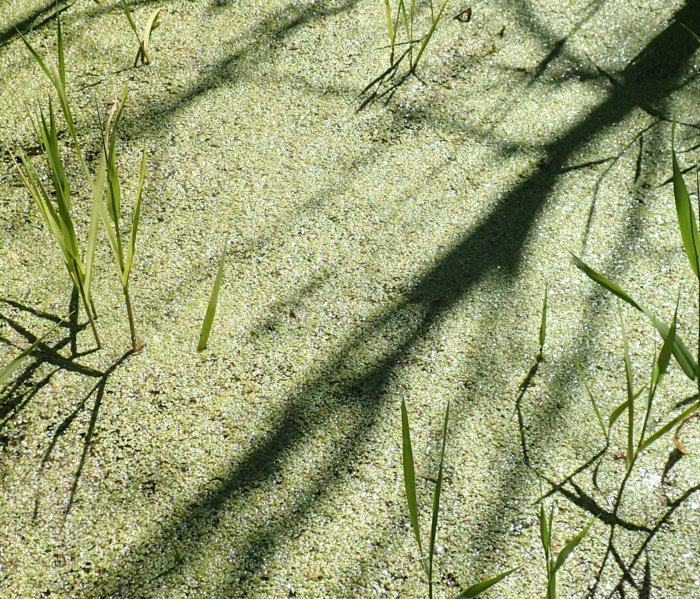
The mat is not continuous, it is made up of hundreds of thousands of tiny individual plants.
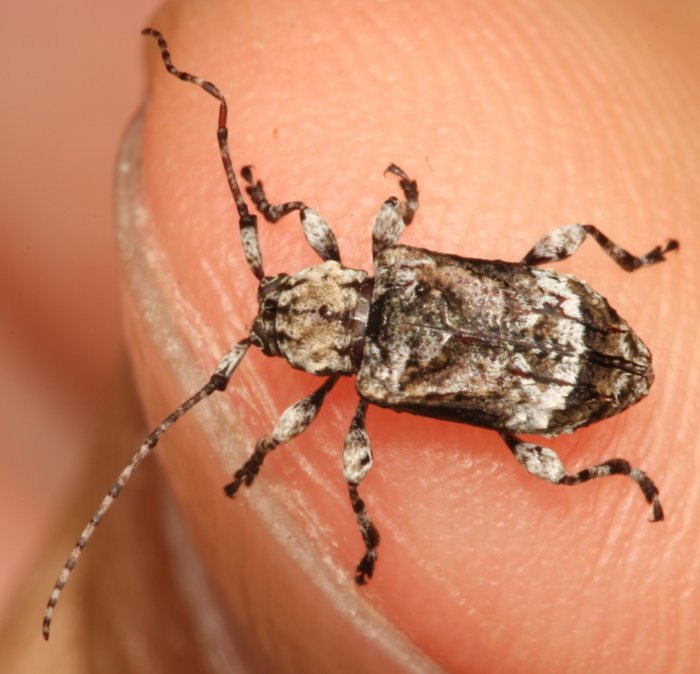
Sam brought me this beetle on August 9, 2016. I think she caught it around our front door, near the porch light. That dark and white coloration is the sort of thing you see when an insect camouflages itself to resemble a bird dropping.
These were photographed on July 5, 2016. They were growing in the ditch alongside our road, where the ground is consistently moist. The photo doesn’t fully do justice to the size of the plants, they were around four to five feet tall.

Sam caught this moth for me in the yard on July 24, 2016.

We’ve seen this one before, although last time the specimen was so badly tattered that it looked quite different. It is a Crocus Geometer, Xanthotype sospeta.
These daisies were part of the rich community of invasive plants[1] growing over our septic tank drain field on June 29, 2016

They are clearly disturbed-soil colonizers, they’ve largely taken over large expanses of ground.
This moth from July 10, 2016 is pretty well camouflaged. It would be even better if it were on actual bark, and not on a dead log that the bark had sloughed off of.

The reddish-brown forewings with the white band along the trailing edge is unusual enough that I think the best match is the adult moth of the Yellow-Headed Cutworm, Apamea amputatrix
These flowers that I found growing beside the road on July 19, 2016, are another type[1] of fleabane:
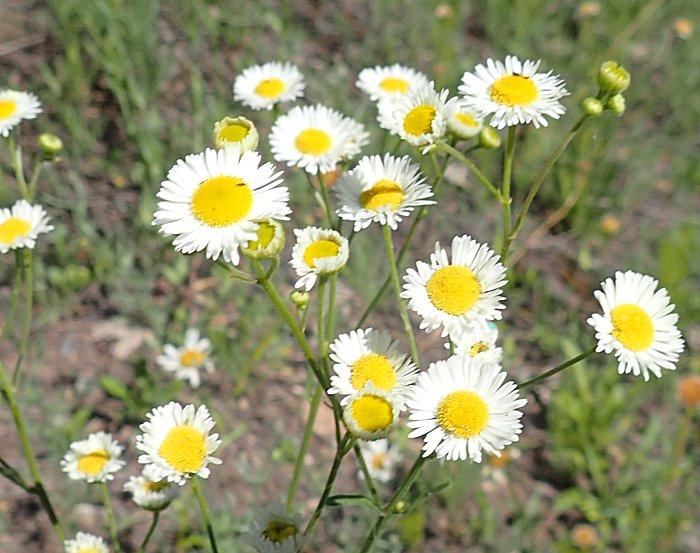
They resemble daisies, but the white petals on the ray florets are still more numerous and thinner than what you would see on a daisy.
Here are two moths from June, 2016. The first one is a new species for this site, that was at our porch light on June 25.

When I was taking the pictures, I thought it was going to be a repeat (specifically, I thought it was a Hickory Tussock Moth like the one I photographed back in 2007), but while the color was close, the pattern was wrong. And on closer examination of the head/thorax, it didn’t really look furry enough on the shoulders to be a tiger moth.
We have little purple flowers blooming at random places all over our yard, like this one from July 1, 2016. They start blooming in the spring, and we see them all the way through to September.

The blossoms are pretty, but very tiny, as you can see by comparing this one to my fingertips: