
This moth was at our porch light on June 30, 2016, and I managed to get it onto my finger for photographs. Judging from how it compares with my finger, the wingspan is a bit over an inch.
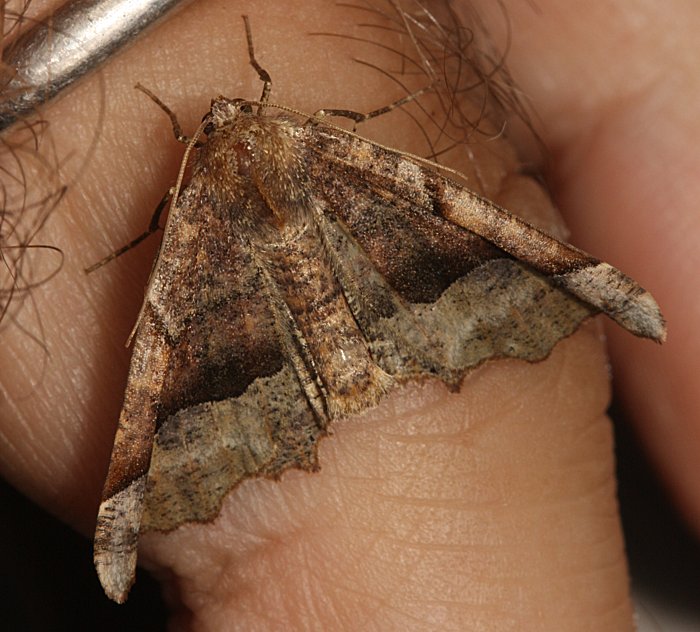
Its face is pretty typical for a moth.
These were blooming over our septic tank drain field on July 1, 2016. The plants stand about knee-height.

The most distinctive thing about them is their flowers, which have a prominent “pouch” that the petals stick out of.
These are two different specimens of what I think are almost certainly the same species, one from June 25, 2016 and the other from July 9, 2016. If it weren’t for the date stamps on the photos, I’m not sure I’d be able to tell which one was which. Well, that and the fact that the one from July is missing a leg.

One of the most striking features of the most common insects is the really remarkable changes that happen when the larva forms a pupa that completely restructures itself into the adult. The metamorphosis is often so radical that there is no obvious similarity between the larva and the adult at all.
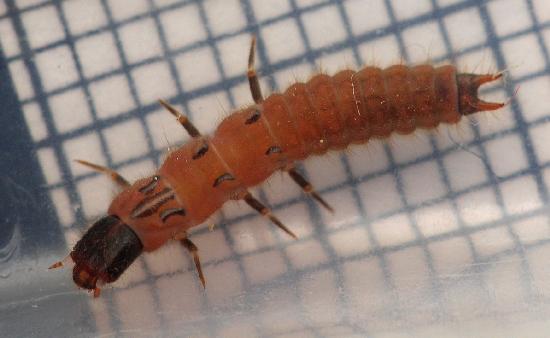

Not all insects do this. The silverfish, true bugs, mantids, cockroaches, dragonflies, damselflies, mayflies, stoneflies, lice, and a bunch of other mostly-obscure groups develop directly from nymphs to adults, with no pupa stage. The young just become more similar to the adults with every molt until they finally mature (by developing genitalia, and usually also by growing wings).
Some of the most common moths coming to our porch light on June 25-30, 2016 were a variety of small moth species that were clearly in the family Geometridae. They all had the same general pose and wing shape, but radically different colors. Some were almost white:

These were blooming in some profusion alongside our road on June 29, 2016.

The leaves aren’t very distinctive,
Sam and Rosie found this spider in the corner of our bathroom on July 15, 2016. It’s another example of our old friend Pholcus phalangioiedes, the common cellar spider that is found in houses all around the world. She had eggs.

These rather bright yellow flowers are very common along road margins and bloom through most of the summer, this particular plant was next to our road on June 29, 2016.

This is Birdsfoot Trefoil, Lotus corniculatus. The flowers grow in a radiating cluster at the tip of the stem, and their odd, asymmetrical blossom shape is pretty similar to other legumes like beans and peas.
We found this caterpillar on June 20, 2016. It is a relatively small caterpillar – if you compare it to the spacing of my fingerprints, it looks to be less than an inch long.

I don’t remember exactly how we found it, but it wasn’t on its food plant, so we didn’t know what to feed it well enough to try raising it. Although, even if we did, it might not have worked out – if you look about 2/3 of the way down its body, you can see a dark patch:
These big, pinkish-purple flowers were blooming alongside the road on June 29, 2016.

The blossoms grow in a cluster at the end of the stalk.